Property taxes in the Dominican Republic
If you own or are thinking about buying land or property in the Dominican Republic, you need to know the applicable taxes. It is not complicated, but ignoring them can cost you dearly. Here we explain the main taxes you should know as a property owner, especially if you live abroad.
Real Estate Property Tax (IPI)
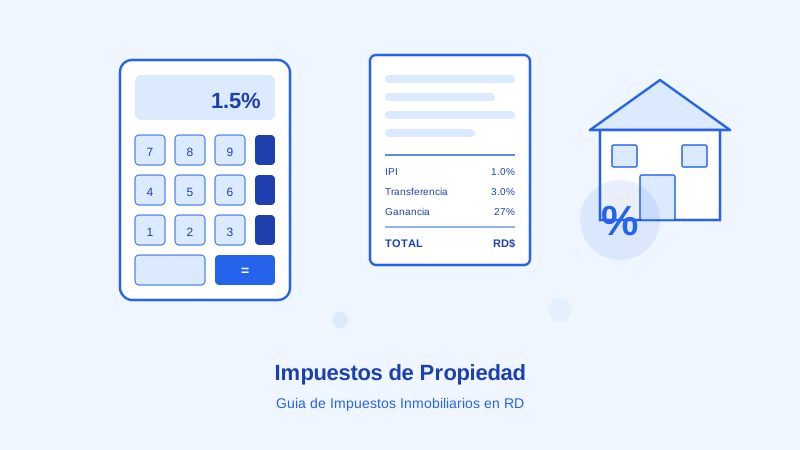
The IPI (Impuesto a la Propiedad Inmobiliaria) is the annual tax paid for owning real estate in the Dominican Republic. It is administered by the Dirección General de Impuestos Internos (DGII, the tax authority).
Who pays it?
Every individual (not companies) who owns properties whose combined value exceeds RD$9,860,649.00 (this amount is adjusted periodically). If your total properties in your name are below this amount, you are exempt.
How much is it?
The rate is 1% per year on the value exceeding the exempt amount. For example, if your properties are worth RD$15,000,000, you would pay 1% on RD$5,139,351 (the difference), which would be approximately RD$51,393 per year.
Important exemptions
- Properties whose combined value does not exceed the minimum established amount
- Agricultural land (with certain conditions)
- Properties of persons over 65 years of age that serve as their primary residence (with limits)
- Company-owned properties (taxed under a different regime)
How is it paid?
The IPI is paid in two installments: the first before March 11 and the second before September 11 of each year. It can be paid online through the DGII portal, which is convenient if you are abroad.
Real estate transfer tax
Every time a property is transferred (when you buy or sell), a transfer tax of 3% of the property value must be paid. This tax is the buyer's responsibility and is paid at the DGII as part of the title transfer process.
It is important to include this cost in your budget. If you buy a plot for RD$2,000,000, the transfer tax will be RD$60,000, plus lawyer fees and other administrative costs.
The value used to calculate the tax is the higher of the declared sale price and the cadastral value registered with the DGII. So do not try to declare a lower price to pay less tax, because the DGII can use its own appraisal.
Capital gains tax
If you sell a property for more than you paid for it, the gain is subject to a 27% tax on the net gain (sale price minus purchase price and justified expenses).
However, in practice, many real estate transactions between individuals are handled through the 3% transfer tax, which functions as a final payment. It is advisable to consult with an accountant or tax lawyer to understand how this applies to your specific case.
How to stay compliant from abroad
If you live outside the DR and own property there, these are the ways to keep your taxes current:
- DGII online portal: The DGII has an online system where you can check and pay the IPI with a credit or debit card from anywhere in the world.
- Tax representative: You can designate someone in the DR as your representative before the DGII to handle your tax obligations.
- Alerts and reminders: Mark the payment dates on your calendar. Late payment generates a 10% surcharge the first month and an additional 4% each month after.
- Periodic review: At least once a year, check the status of your properties at the DGII to make sure there are no surprises.
Common tax mistakes
- Not paying the IPI: Many property owners, especially those living abroad, forget about the IPI. Accumulated debts incur surcharges and interest, and in extreme cases can result in liens.
- Not registering the transfer: Buying land and not completing the transfer at the Registro de Títulos means the land legally remains in the seller's name, and any tax obligations are in limbo.
- Underestimating total costs: The purchase price is just the beginning. Add the 3% transfer tax, legal fees, annual IPI, and possible deslinde costs. A common mistake is only budgeting for the land price.
- Not consulting a professional: Tax laws change and have nuances. What applied 5 years ago may not apply today. Always consult with an up-to-date accountant or tax lawyer.
Have questions about the taxes on a piece of land you want to buy? Send us the location and we will help you calculate the total investment costs, including taxes and transfer fees. At Invertir en el Patio, we give you the complete information so there are no surprises.